

Have you ever wondered what tools and materials are needed to start Aari embroidery?
Many beginners feel confused when they visit a craft store or search online because there are dozens of different needles, threads, beads, fabrics, and accessories available. The good news is that you only need a few essential materials to start learning Aari work.
In this complete guide, you'll learn the names of all important Aari work materials, their uses, and which items are necessary for beginners.
What Materials Are Required for Aari Work?
The essential materials required for Aari work are:
1. Aari Needle (Aari Hook)
2. Aari Frame (Adda Frame)
3. Practice Cloth
4. Tracing Paper
5. Carbon Paper
6. Fabric Marker
7. Embroidery Thread
8. Zari Thread
9. Beads
10. Sequins
11. Stones
12. Scissors
13. Measuring Tape
14. Chalk Powder
15. Fabric Glue
If you are a beginner, the first seven items are enough to start practicing basic stitches.
Complete Aari Work Materials List
To create beautiful Aari embroidery designs, you need a combination of essential tools, decorative materials, and supporting accessories. While beginners can start with a few basic items, professional Aari artists often use a wider range of materials depending on the design requirements.
Essential Materials for Beginners
These are the basic materials every beginner should have before starting Aari work:
- Aari Needle – The primary tool used for creating chain stitches and embroidery patterns.
- Adda Frame (Aari Frame) – Holds the fabric tightly in place for smooth and accurate stitching.
- Practice Cloth – Used for learning basic stitches and improving embroidery skills.
- Tracing Paper – Helps transfer embroidery designs onto fabric.
- Carbon Paper – Used to copy traced patterns onto the cloth accurately.
- Fabric Marker – Useful for drawing temporary guidelines and embroidery outlines.
- Embroidery Thread – The main material used to create embroidery stitches and decorative patterns.
Optional Decorative Materials
Once you become comfortable with basic Aari work, these decorative materials can help create more attractive and professional designs:
- Zari Thread – Adds a rich and traditional appearance to embroidery work.
- Beads – Enhance designs with texture and decorative detailing.
- Sequins – Provide sparkle and shine, making designs more eye-catching.
- Stones – Commonly used in bridal wear, designer blouses, sarees, and festive garments.
Supporting Tools
These additional tools make the embroidery process easier and more efficient:
- Scissors – Used for cutting threads neatly and accurately.
- Measuring Tape – Helps maintain correct dimensions and design placement.
- Chalk Powder – Traditionally used for transferring embroidery patterns onto fabric.
- Fabric Glue – Useful for attaching stones, mirrors, and decorative embellishments.
If you are just starting your Aari embroidery journey, focus on purchasing the essential materials first. As your skills improve, you can gradually add decorative materials and advanced tools to create more intricate and professional designs.
1. Aari Needle (Aari Hook)
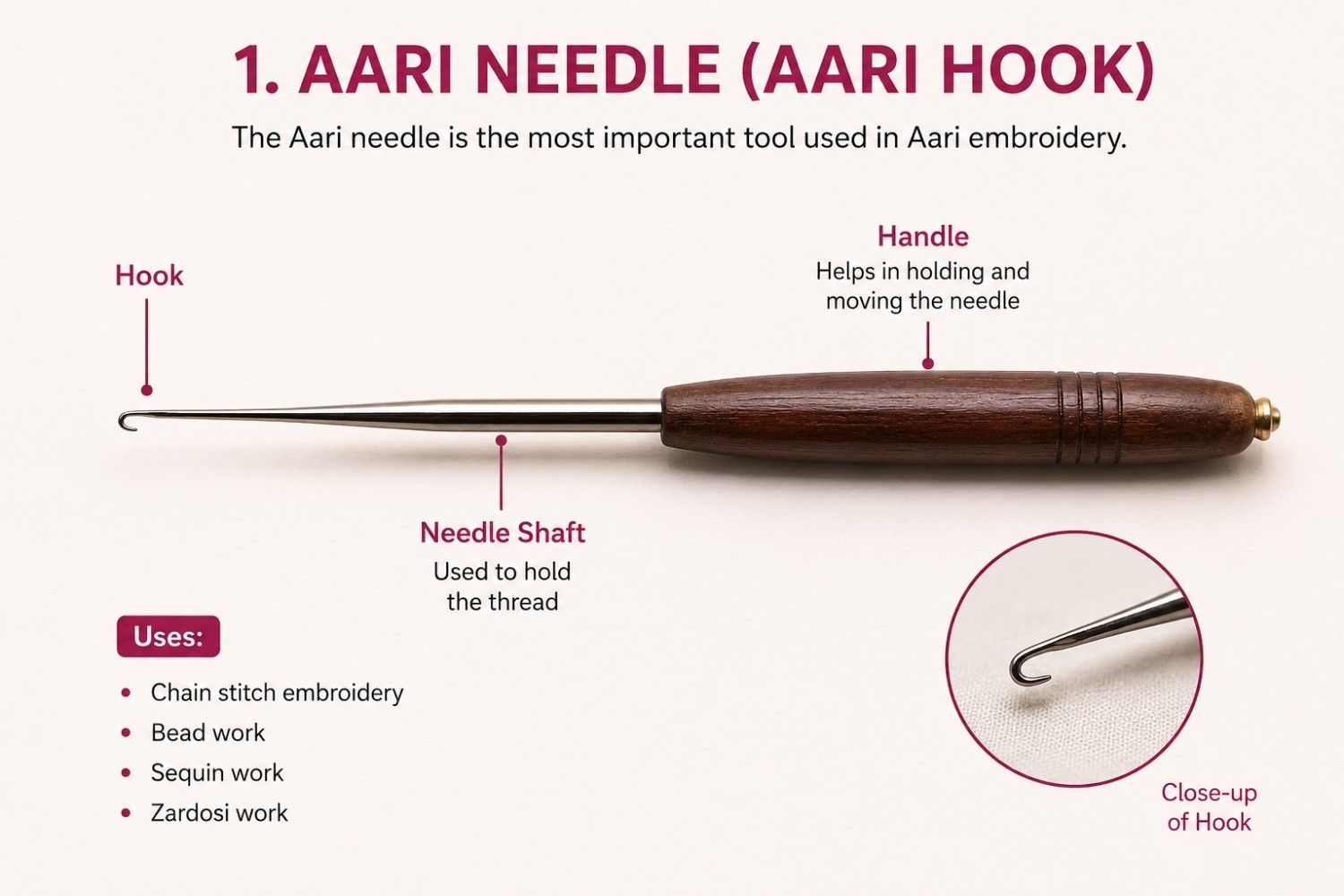
The Aari needle is the most important tool used in Aari embroidery. Unlike a regular sewing needle, it has a small hook at the tip that creates chain stitches quickly and smoothly.
Uses of Aari Needle
- Chain stitch embroidery
- Bead work
- Sequin work
- Zardosi embroidery
- Designer blouse work
Beginner Tip
Always choose a medium-sized Aari needle when learning basic stitches.
 Embroiderymaterial Multicolour Aari Embroidery Needles Kit (Pack of 4)Buy Now
2. Aari Frame (Adda Frame)
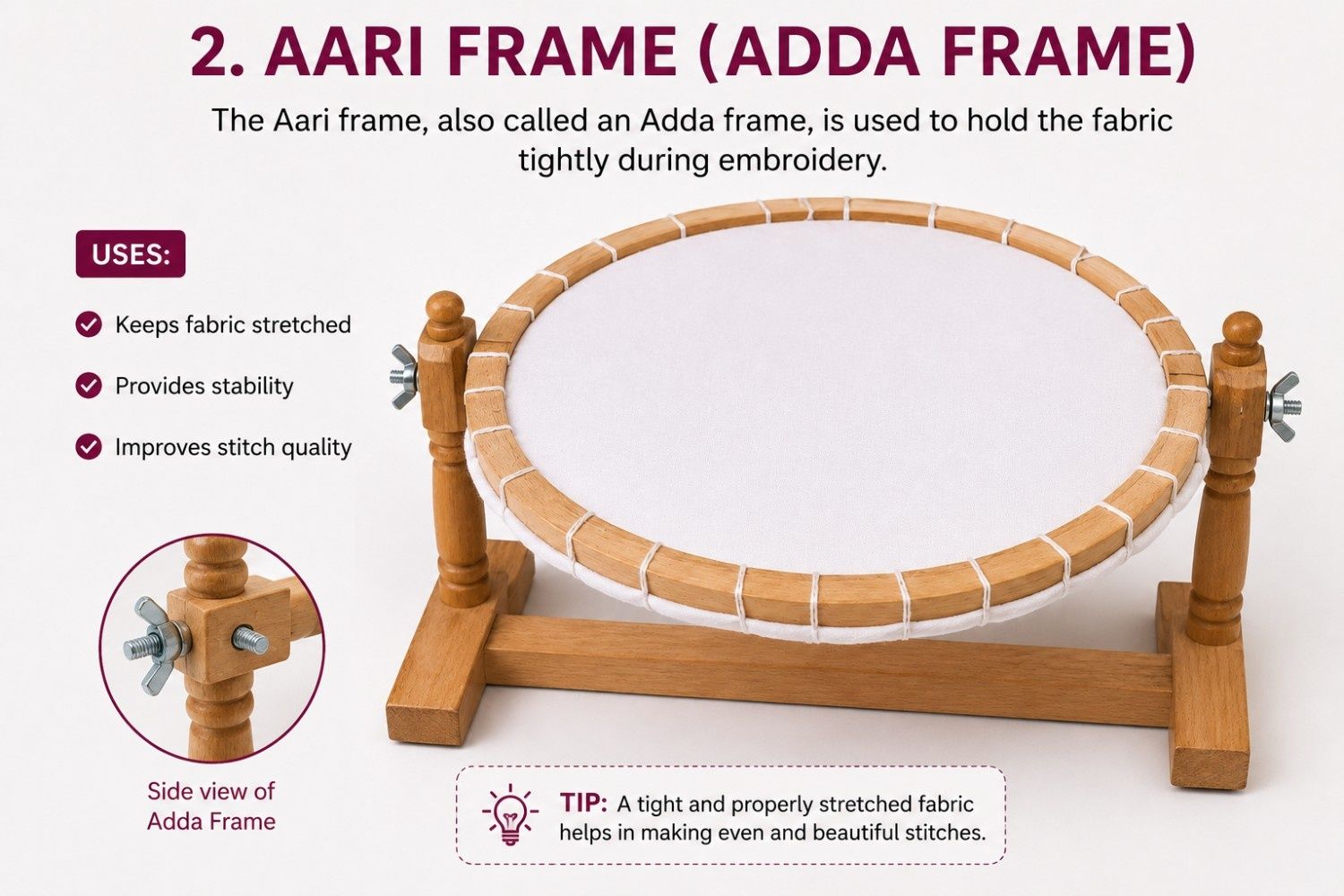
An Adda frame keeps the fabric stretched and stable while you work. Tight fabric helps create neat and professional stitches.
Benefits
- Prevents fabric movement
- Improves stitch quality
- Reduces mistakes
- Makes embroidery easier
Best for Beginners
Small tabletop Adda frames are easier to manage than large professional frames.
3. Practice Cloth
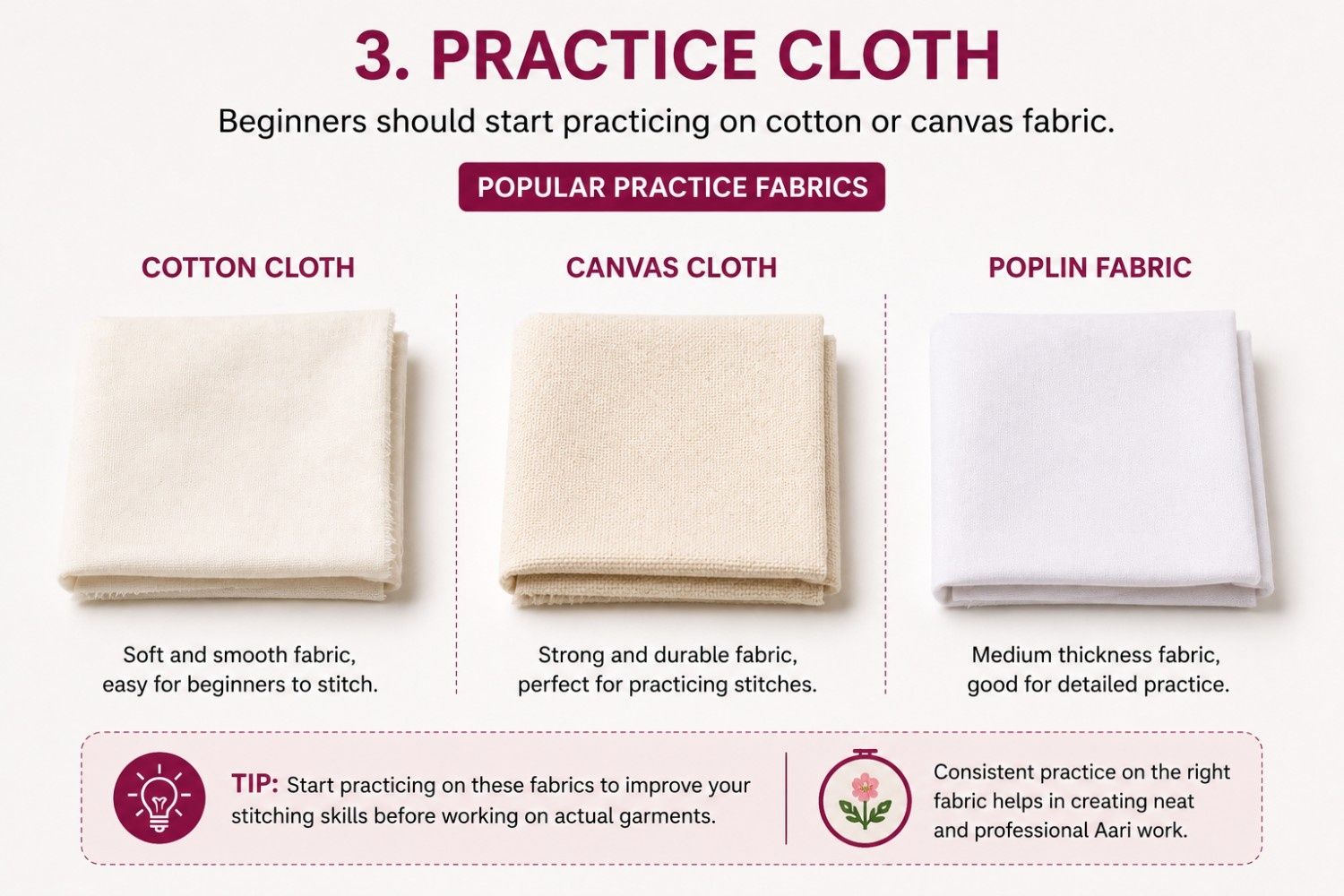
Before working on expensive fabrics, beginners should practice on affordable fabrics.
Best Fabrics for Aari Work Practice
Cotton Cloth
- Soft and beginner-friendly
- Easy to stitch
Canvas Cloth
- Strong and durable
- Ideal for repeated practice
Poplin Fabric
- Smooth surface
- Good for detailed work
Recommended Choice
Cotton cloth is usually the best option for absolute beginners.
4. Tracing Paper
Tracing paper is used to copy embroidery designs before transferring them onto fabric.
Uses
- Pattern tracing
- Design preparation
- Creating reusable templates
Most Aari artists keep a collection of tracing papers for future projects.
5. Carbon Paper
Carbon paper helps transfer traced designs directly onto fabric.
Advantages
- Quick design transfer
- Accurate outlines
- Easy to use
This tool saves significant time when preparing embroidery projects.
6. Fabric Marker
Fabric markers are used to draw temporary guidelines and embroidery patterns.
Benefits
- Clear markings
- Easy correction
- Better accuracy
Choose washable fabric markers whenever possible.
7. Embroidery Thread
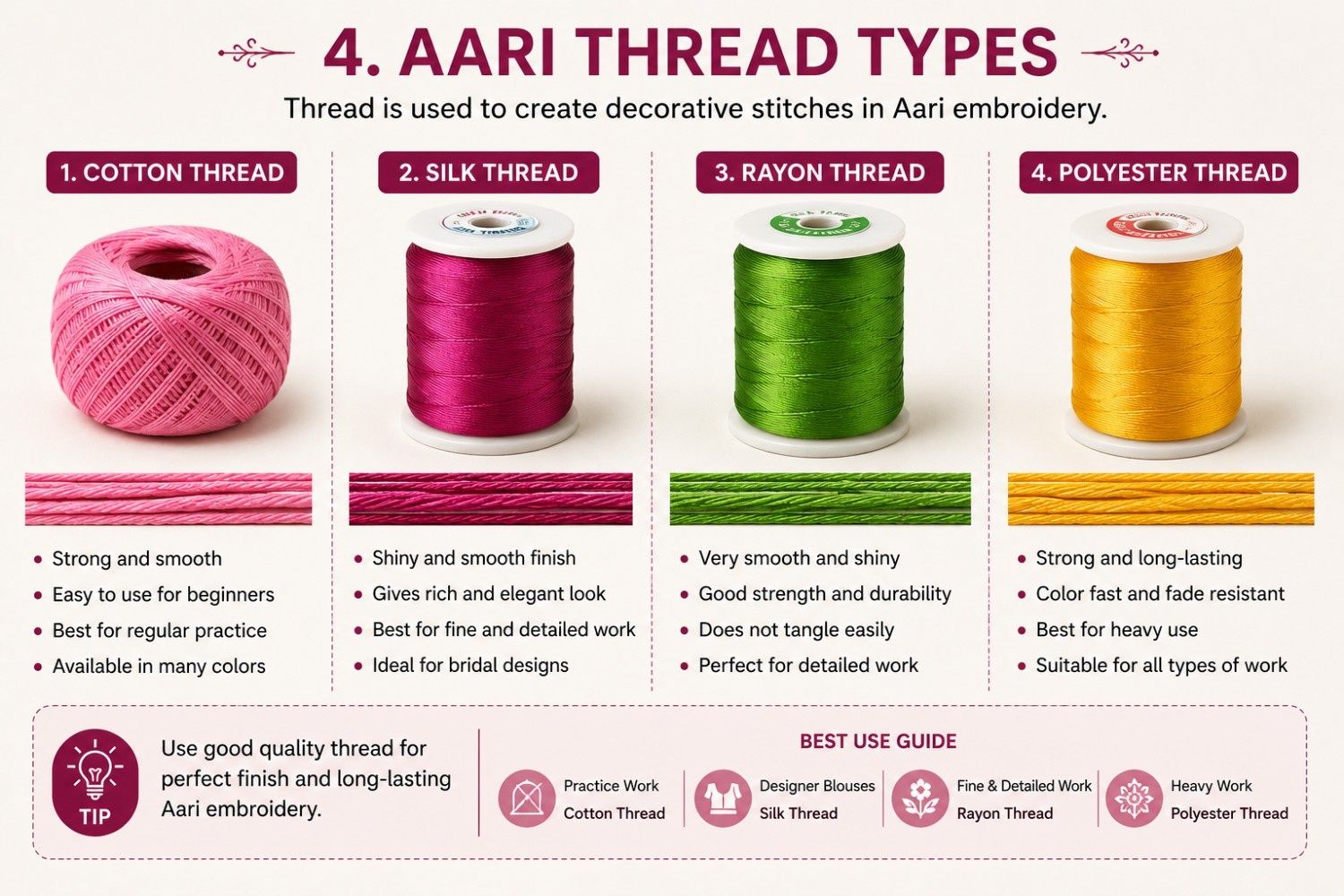

Threads are the foundation of every embroidery design.
Common Aari Thread Types
Cotton Thread
Best for:
- Practice work
- Beginners
- Everyday embroidery
Silk Thread
Best for:
- Bridal designs
- Luxury garments
- Rich finishing
Rayon Thread
Best for:
- Detailed embroidery
- Smooth finishing
- Vibrant colors
Polyester Thread
Best for:
- Durability
- Commercial embroidery
- Daily wear garments
Which Thread Should Beginners Use?
Cotton thread is usually the easiest and most affordable choice for learning.
8. Zari Thread
Zari thread adds a traditional and luxurious appearance to embroidery.
Common Uses
- Saree borders
- Bridal blouses
- Lehengas
- Festival wear
Gold and silver zari threads remain the most popular choices.
9. Beads
Beads add texture, depth, and beauty to embroidery designs.
Popular Types
- Plastic Beads
- Glass Beads
- Pearl Beads
- Metallic Beads
Beads are commonly used in bridal and designer embroidery projects.
10. Sequins
Sequins create sparkle and decorative effects.
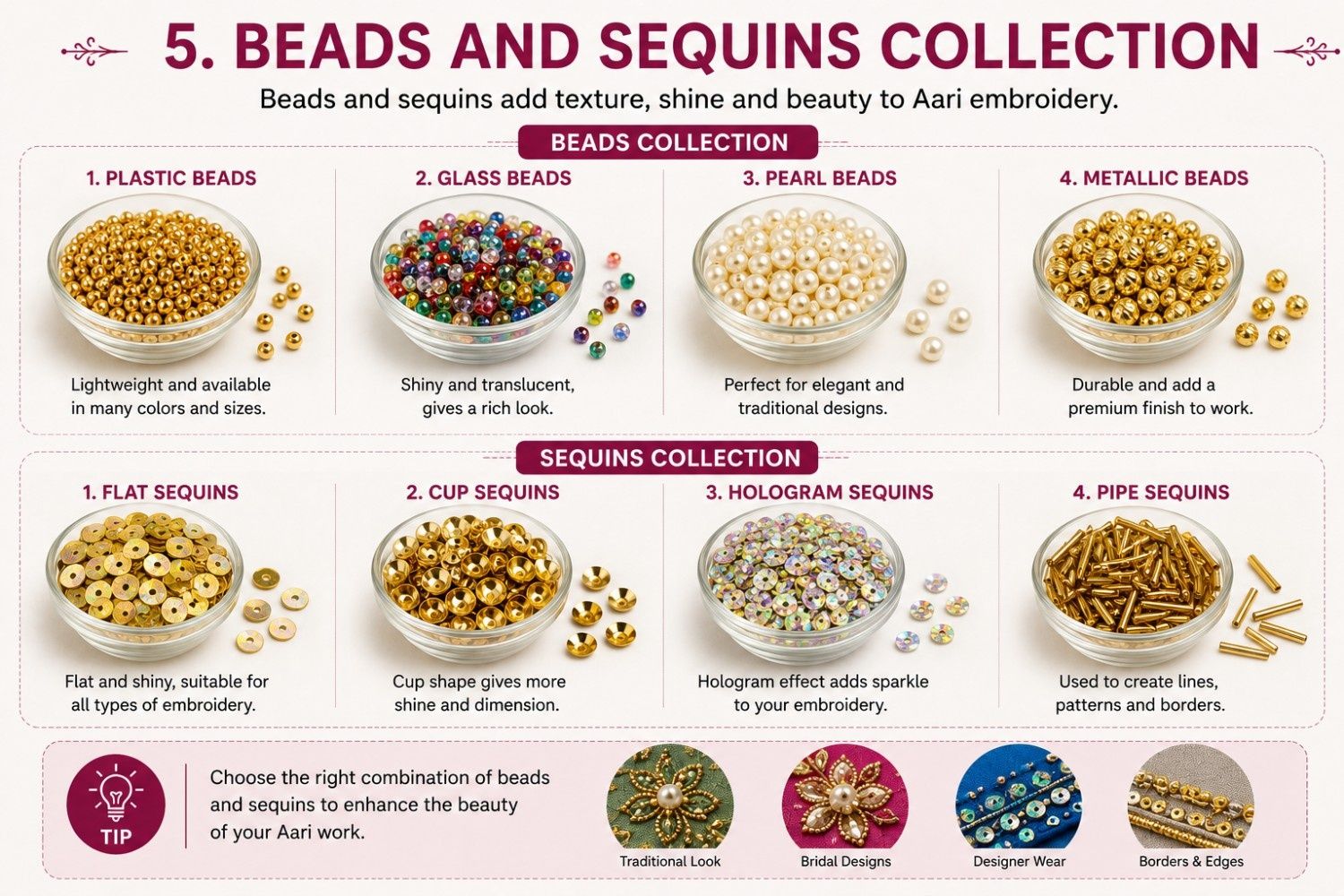
Types of Sequins
- Flat Sequins
- Cup Sequins
- Hologram Sequins
- Pipe Sequins
Sequins are especially popular in party wear and festive clothing.
11. Stones
Decorative stones help create premium-looking embroidery designs.
Common Stone Types
- Kundan Stones
- Crystal Stones
- Mirror Stones
- Acrylic Stones
These materials are widely used in bridal and fashion embroidery.
12. Scissors
Small embroidery scissors allow precise cutting of thread and fabric.
Why They Matter
Clean cuts improve the overall appearance of finished embroidery work.
13. Measuring Tape
Measuring tape helps maintain accurate dimensions and symmetry.
Common Uses
- Border measurement
- Pattern placement
- Garment sizing
14. Chalk Powder
Traditional Aari artists often use chalk powder for transferring designs.
Benefits
- Temporary markings
- Easy removal
- Cost-effective
15. Fabric Glue
Fabric glue is useful for attaching stones, mirrors, and decorative elements.
Uses
- Stone fixing
- Mirror work
- Final finishing
Always use fabric-safe glue to avoid damaging garments.
Aari Work Materials Checklist for Beginners
Use this checklist before starting your first project:
✅ Aari Needle
✅ Adda Frame
✅ Cotton Practice Cloth
✅ Tracing Paper
✅ Carbon Paper
✅ Fabric Marker
✅ Cotton Thread
✅ Small Scissors
✅ Measuring Tape
Once you become comfortable with basic stitches, you can add beads, sequins, stones, and zari threads.
Frequently Asked Questions
What materials are needed for Aari work?
The basic materials required are an Aari needle, Adda frame, practice cloth, tracing paper, carbon paper, fabric marker, and embroidery thread.
Which cloth is best for Aari work practice?
Cotton cloth is considered the best fabric for beginners because it is soft, affordable, and easy to stitch.
What thread is used in Aari work?
Cotton, silk, rayon, polyester, and zari threads are commonly used in Aari embroidery.
Is an Adda frame necessary?
Yes. An Adda frame helps keep the fabric stretched and improves stitch quality.
Can I learn Aari work at home?
Yes. Many beginners successfully learn Aari work at home using basic tools and online tutorials.
What is the cost of an Aari work starter kit?
A basic Aari work kit is generally affordable and includes a needle, frame, practice cloth, thread, and tracing materials.
Conclusion
Learning Aari embroidery becomes much easier when you understand the purpose of each tool and material. Start with the essential items such as an Aari needle, Adda frame, cotton cloth, and embroidery thread. As your skills improve, you can gradually experiment with zari threads, beads, sequins, and stones to create professional-quality embroidery designs.
Whether your goal is to learn Aari work as a hobby or start a professional embroidery business, having the right materials is the first step toward success.